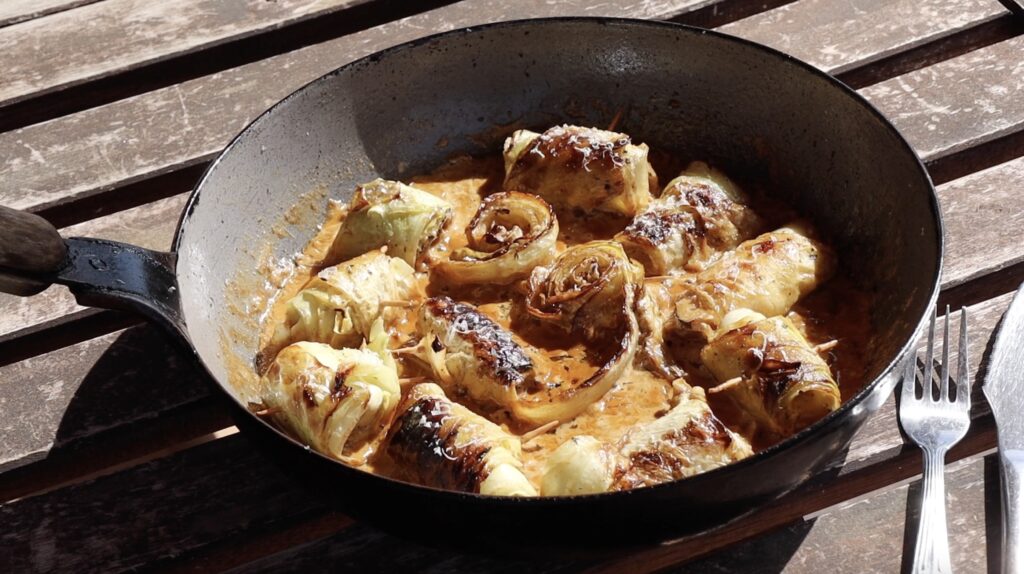
Savoury Braised Cabbage Rolls in Parmesan Cream
A Deep Dive into Flavor, Texture, and the Magic of Slow Cooking
Cabbage is often treated like a filler vegetable — something cheap, something plain.
But when you understand what’s actually happening in the pan — the browning, the breakdown of fibers, the layering of fats and umami — it becomes something entirely different.
This recipe isn’t just about cooking cabbage.
It’s about transforming it.

Serves:
4 people
Time to Prepare:
20 min
Time to cook or cure:
30 min
Skill
Searing and Braising
Serves:
4 people
Time to Prepare:
20 min
Time to cook or cure:
30 min
Skills:
Searing and Braising
Ingredients & Tools
Ingredients
- 1 medium head cabbage
- 3 tbsp butter
- Salt, to taste
- Black pepper, to taste
- 100 ml (3.4 fl oz) thick cream
- 250 ml (1 cup) beef stock
- Splash of soy sauce
- 1 tsp thyme
- 1 tbsp grated parmesan cheese
Tools
- Cutting board
- Sharp knife
- Toothpicks (if making rolls)
- Spoon
- Tongs
- Cast iron pan with high rims
Useful guidelines
What makes this dish work is patience. The browning stage builds the base, the gentle braise develops texture, and the final reduction brings everything together. Rushing any of these steps will still give you something edible, but not something memorable.
Directions
Simply follow these steps in order to make the cabbage rolls
Step 1: Prepare and Understand Your Cabbage
Begin by removing any rough or damaged outer leaves from the cabbage and placing it on your cutting board. Take a moment here, because the structure of your cabbage will guide how you cook it.
If the cabbage feels tight and compact, slice it into thick wedges, making sure each piece keeps a bit of the core intact. The core is important, as it holds everything together during cooking and prevents the layers from falling apart.
If the cabbage is looser and the leaves separate more easily, gently peel them away and trim the thickest part of the stem so they become flexible. You can then roll them into small bundles and secure them with a toothpick.
This choice affects how the dish develops. Wedges stay firmer and cook more slowly, while rolls soften faster and allow the sauce to move between the layers.
Step 2: Slowly Melt the Butter and Prepare the Pan
Place your cast iron pan over medium heat and add the butter. Let it melt slowly rather than rushing the process.
At first, the butter will simply turn into a liquid. After a short while, it will begin to foam slightly. This is the water content evaporating, leaving behind fat and milk solids.
These milk solids are what will later give you that slightly nutty, rich flavor. If the butter starts to brown too quickly or smell sharp, the heat is too high, so lower it slightly and give it a moment to settle.
Step 3: Place and Brown the Cabbage Without Moving It Too Soon
Now place your cabbage into the pan.
If you are using wedges, set them cut side down so they make full contact with the pan. If you are working with rolls, place them seam side down so they stay closed.
At this stage, it is important not to move the cabbage too quickly. Let it sit and build color.
As the cabbage cooks, the natural sugars begin to react with the heat. This creates deeper, more complex flavors and reduces the sharpness that raw cabbage can have. The surface will slowly turn golden, and then deeper in color.
Season with salt and pepper while it browns. The salt helps draw out moisture, which in turn supports better browning and concentrates the flavor.
Once the first side has developed a rich golden color, gently turn the cabbage with tongs and allow other sides to catch some heat as well.
Step 4: Add Liquid and Lift the Flavors from the Pan
Once the cabbage is nicely browned, pour in the beef stock, followed by a small splash of soy sauce and the thyme.
As the liquid hits the pan, it will sizzle and loosen everything that has stuck to the bottom. Take a spoon and gently scrape along the base of the pan to lift those bits into the liquid.
These browned bits are full of flavor, and this step ensures they become part of the sauce rather than being left behind.
The soy sauce adds depth and enhances the savory character of the dish without standing out on its own.
At this point, the liquid should come about halfway up the cabbage, enough to cook it gently without fully submerging it.
Step 5: Let the Cabbage Braise Slowly
Lower the heat and pour in the cream. You want a gentle simmer rather than a strong boil.
Over the next 25 to 35 minutes, the cabbage will begin to soften. As it cooks, its structure relaxes and becomes tender, while still holding its shape if handled carefully.
During this time, the cabbage absorbs the cooking liquid, taking in the savory flavors of the stock and thyme. At the same time, it releases some of its own natural sweetness into the sauce, creating a balance between richness and softness.
Turn the cabbage occasionally with tongs so it cooks evenly on all sides.
You are looking for a texture that is soft and yielding, but not falling apart.
Step 6: Add Cream and Parmesan to Build the Sauce
Once the cabbage is tender, add the grated parmesan.
Gently spoon the sauce over the cabbage so everything is coated.
The cream brings richness and smoothness, softening the stronger flavors from the stock and soy sauce. The parmesan deepens the savory character and adds a slightly salty, rounded finish.
Let the pan simmer uncovered for another 5 to 10 minutes. This allows some of the liquid to evaporate, which naturally thickens the sauce and helps it cling to the cabbage.
Step 7: Taste, Adjust, and Let It Settle
Before serving, taste the sauce and adjust the seasoning with a bit more salt or pepper if needed.
Let the dish sit for a few minutes off the heat. This short resting time allows the sauce to settle and slightly thicken, making everything feel more cohesive.
Storage
If you happen to have leftovers, they keep beautifully in the fridge for a few days. In fact, the dish often improves overnight, as the flavors continue to settle and distribute themselves more evenly. When reheating, do so gently, adding a small splash of stock or water if needed to loosen the sauce.
Frequently asked questions
1. Why does cabbage become sweet when cooked?
Heat breaks down complex carbohydrates into simpler sugars, making cabbage taste sweeter.
2. Why is browning so important?
Because it creates entirely new flavor molecules that don’t exist in raw cabbage. This process is called the Maillard reaction, and it happens when amino acids and natural sugars rearrange under heat, forming deeper, more complex flavors.
3. Can I overcook cabbage?
Yes, it becomes mushy when too much pectin breaks down. To avoid this, keep cooking above 100°C (212°F) relatively short, ideally no longer than about 8 minutes. If you want to cook cabbage for longer, it is better to lower the heat and braise it gently. This slower approach softens the cabbage while preserving its natural sweetness and preventing those harsh sulfur notes from developing.
4. Why combine soy sauce and parmesan?
Both are rich in glutamates, which amplify savory taste (umami).
5. Why does this taste better the next day?
Because flavors redistribute and stabilize over time — a process similar to marinating.
Fermented Vegetables

Recipe Categories
Latest videos