Traditional Sauerkraut Recipe (2% Salt, No Spices)
Old-School Fermented Cabbage in a Water-Seal Jar
Learn how to make real, traditional sauerkraut using just cabbage and salt. This no-spice recipe follows an old-school fermentation method using a water-seal crock, producing a deeply flavorful, probiotic-rich ferment that stores beautifully for months.
Serves:
1,5 kg of sauerkraut
Time to Prepare:
30 min
Time to cook or cure:
1-2 weeks
Skill
Fermentation
Serves:
1.5 kg sauerkraut
Time to Prepare:
30 min
Time to cook or cure:
1-2 weeks
Skills:
Fermentation
Ingredients & Tools
Ingredients
- 1.5 kg (3.3 lbs) fresh cabbage
- 30 g (1 oz) natural salt (2% of cabbage weight)
Tools
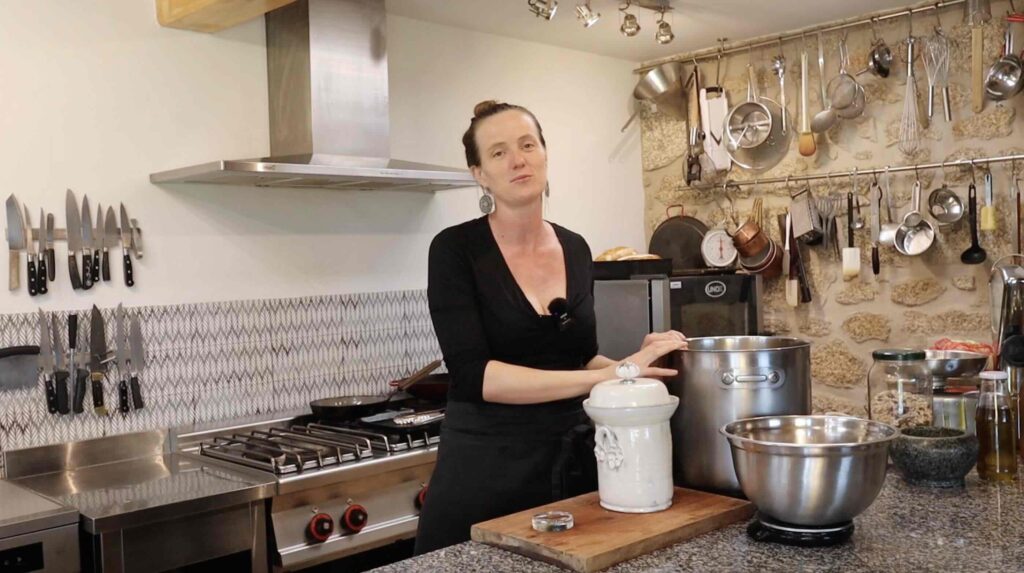
- Fermentation crock with water seal (minimum 3–5 liter capacity)
- Fermentation weights (ceramic or glass)
- Sharp knife or mandoline (or magimix slicer)
- Large mixing bowl
- Kitchen scale
- Clean hands
Useful guidelines
Jar Size Calculation (Important)
For 1.5 kg cabbage, you need:
Minimum crock size: 3 liters (0.8 gallons)
Ideal: 4–5 liters (1–1.3 gallons)
Why?
Cabbage releases liquid and expands slightly during fermentation. You also need space for weights and brine without overflow.
Key tips
- Always keep cabbage below brine
- If brine drops, add 2% saltwater solution
- Do not open crock too often
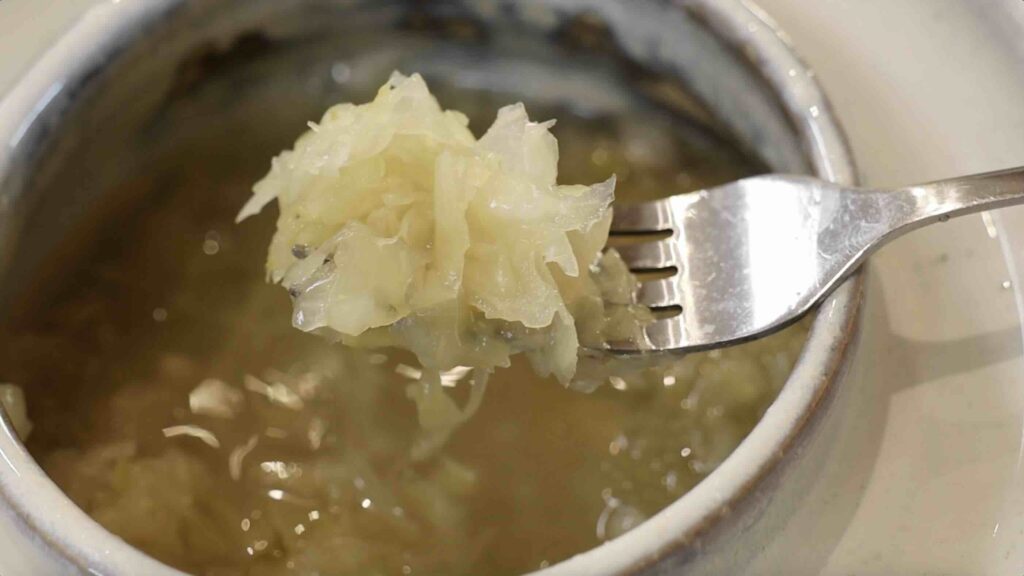
- A sour smell = good
- Rotten smell = discard
How to Eat Sauerkraut
Keep it simple and let it shine:
- Raw, straight from the jar (best for probiotics)
- Warmed up with roasted potatoes and olive oil
- Folded into warm lentils
- Served alongside eggs
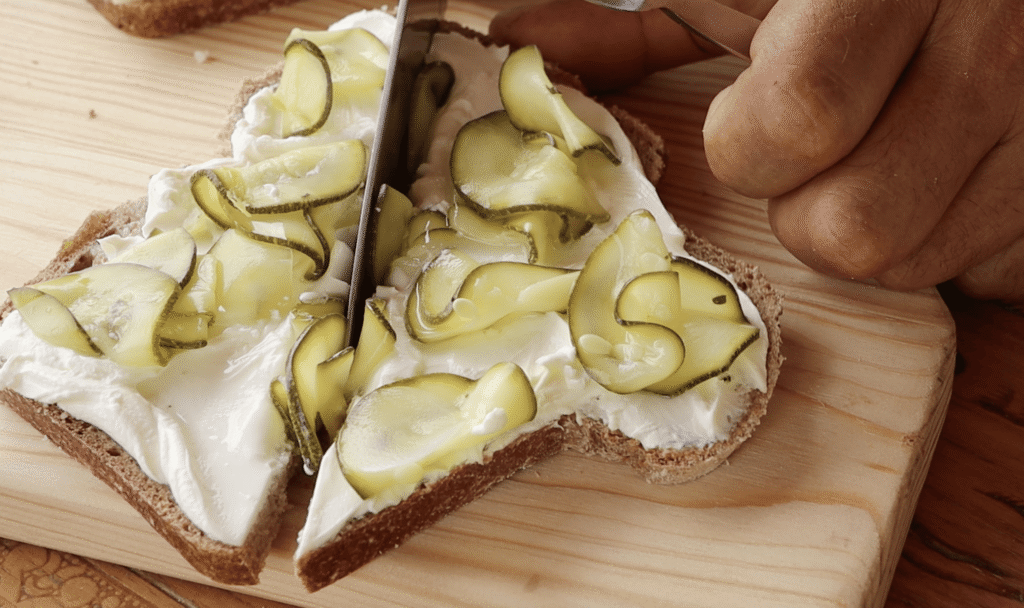
- On sourdough bread with butter
- With slow-cooked meats or beans
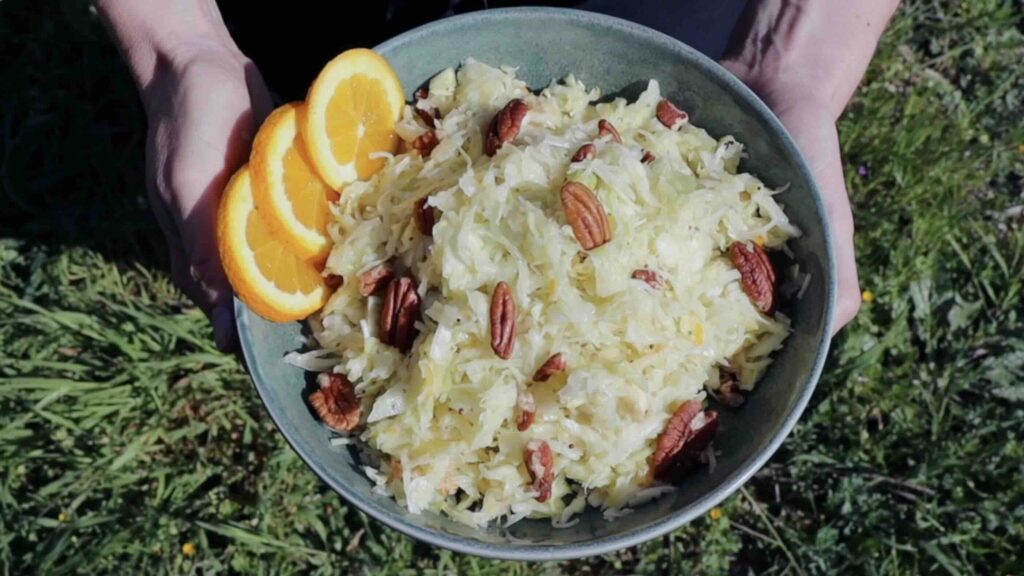
- Mixed into salads for acidity
Avoid heating if you want to preserve the beneficial bacteria.
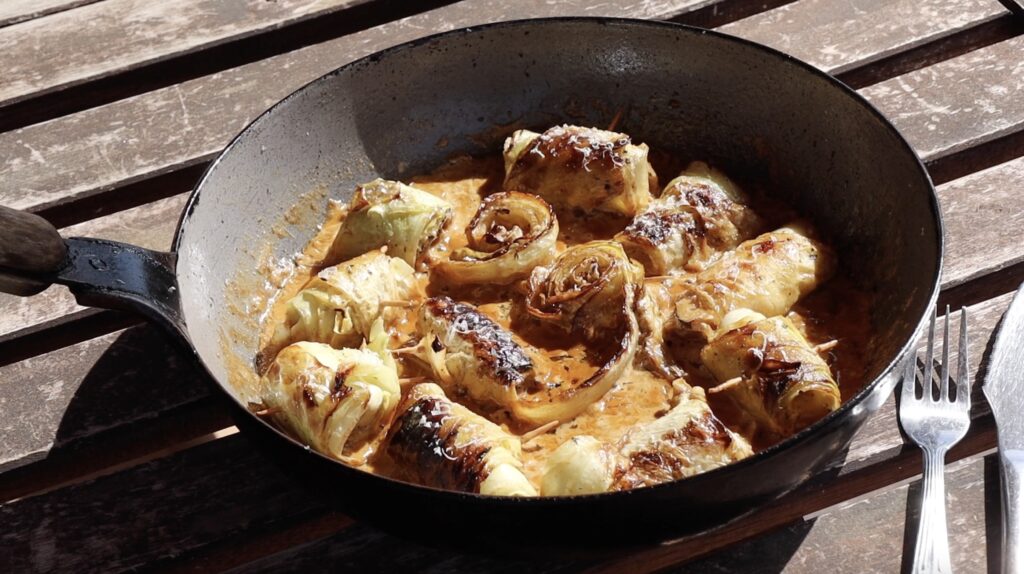
Meat dishes that go great with saurkraut:
Directions
Simply follow these steps in order to make this sauerkraut recipe
1. Prepare the Cabbage
Remove outer leaves (keep 1–2 clean leaves aside).
Slice the cabbage finely (2–3 mm thick).
2. Weigh and Salt
Weigh your shredded cabbage.
Add 2% salt:
- 1.5 kg cabbage → 30 g salt
Sprinkle salt evenly.
3. Massage and Release Juice
Massage the cabbage firmly for 5–10 minutes.
You’re looking for:
- Softer texture
- Visible brine forming
- Reduced volume
This step is crucial — it creates the natural brine.
4. Pack into the Crock
Add cabbage in layers, pressing firmly after each handful.
Goal:
- Remove air pockets
- Bring brine above cabbage level
5. Add Fermentation Weight
Place the weight on top.
The cabbage must be fully submerged under brine.
6. Seal with Water Rim
Fill the crock’s outer rim with water and close the lid.
This creates an airlock system:
- CO₂ escapes
- Oxygen stays out
- Mold risk drops dramatically
8. Ferment
Optimal Temperature:
- 18–22°C (64–72°F) → ideal
- Below 15°C → slow fermentation
- Above 24°C → too fast, risk of soft kraut
Timing:
- Minimum: 2 weeks
- Ideal: 3–6 weeks
- Deep flavor: 2–3 months
Taste after 2–3 weeks and decide.
Storage
Once fermented to your liking:
- Transfer to jars or keep in crock
- Store in:
- Cellar
- Fridge
- Cool pantry (<10°C / 50°F)
Shelf life:
- 6–12 months if submerged and clean
Frequently asked questions
1. Why no spices?
This is traditional, clean fermentation. It allows the natural flavor of cabbage and the microbial process to shine. You can always season your sauerkraut when serving it, or by adding in spiced before the fermentation process. Use spices like; caraway, fennel seeds, bay leaf, black pepper, curcuma, ginger and garlic.
2. What if there’s foam or bubbles?
Totally normal. This is active fermentation (CO₂ release). Make sure the cabbage chunks stay submersed to prevent mold!
3. My cabbage isn’t submerged — what do I do?
Press it down firmly. If needed, add a little 2% brine.
4. Can I ferment longer than 6 weeks?
Yes — and it often gets better. Flavor deepens and becomes more complex.
5. Why use a water-seal crock?
It creates a stable, oxygen-free environment, reducing mold risk and producing more consistent results than open fermentation.
Fermented Vegetables

Recipe Categories
Latest videos