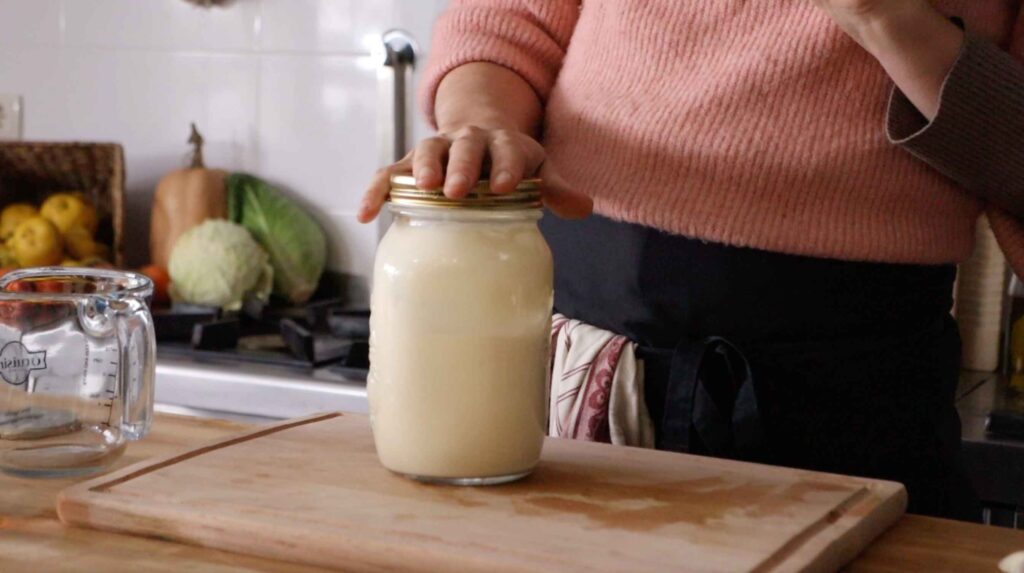
Firm Cheese in Salty Brine
Firm cheese in salty brine is a traditional preservation method that not only enhances the cheese’s flavor but also extends its shelf life. After the cheese is formed and pressed, it is cut into cubes and submerged in a brine solution, typically made from whey and salt. The brine acts as a natural preservative, preventing the growth of unwanted bacteria and mold while also infusing the cheese with a savory, slightly tangy taste. This method is common in Mediterranean and Middle Eastern cuisines, where cheeses like feta are often stored this way. The cheese can be kept in the refrigerator for several weeks, developing a firmer texture and a more pronounced flavor over time. This type of cheese is perfect for crumbling over salads, incorporating into dishes, or simply enjoying on its own.

Serves:
500 gram of cheese
Time to Prepare:
30 min

Time to cook or cure:
2 days- 2 weeks
Skill
cheesemaking
Serves:
500 gram cheese
Time to Prepare:
30 min
Time to cook or cure:
2 days- 2 weeks
Skills:
cheese making

Ingredients & Tools
Ingredients
- 5 liters of milk
- 100 ml of full-fat yogurt
- 150 ml of fresh lemon juice
- 20 grams of salt
- 1 liter of whey from the cheese-making process
Tools
- Big pan
- Wooden spoon
- Cheesecloth
- Strainer
- Ladle
- String
- Cheese mold
- Baking tray
- Drying rack
- Sushi mat (or other mesh to drain cheese on)
- Pestle and mortar or something else to press down cheese
- 1-liter jar for storing cheese
Useful guidelines
Using lemon juice as a curdle agent
Curdling cheese with lemon juice is a traditional method of cheese-making that leverages the acidity of lemon juice to separate milk into curds (solid) and whey (liquid). When you heat milk and add lemon juice, the acid lowers the pH of the milk, causing the proteins (mainly casein) to coagulate and form curds. This method is simple and natural, often used for making soft cheeses like paneer, ricotta, and various homemade cheeses. The curds can then be strained, pressed, and seasoned according to the desired cheese recipe
Directions
Simply follow these steps in order to make the firm cheese in salty brine:
Step 1: Make the basic curd
Heat up your milk to 82 degrees Celsius, gently stirring to prevent the milk from sticking to the bottom of the pan. Take off the heat and stir in the yogurt until well combined. Then add in the lemon juice and return to heat for another 5 minutes, while gently stirring here and there (don’t stir too much). The curd will have separated from the whey. Turn off the heat. Keep 1 liter of whey aside and place it in the fridge.
Step 2: Strain the curd
Hang your strainer above another pan or container and line it with the clean cheesecloth. Now gently scoop the curd and whey into the cheesecloth with a ladle. The curds will drain in the cheesecloth while the whey passes through. This process takes some time, as the whey separates and drains off slowly. Press the whole, once all liquid has been introduced into the cheesecloth, to express more of the whey. Then tie a string around the cheesecloth and hang the whole for about 1 hour.
Step 3: Press the cheese
After one hour, place the strained curd ball into a cheese mold and place the mold on top of a mesh bottom (I used a sushi mat placed on a baking rack on top of a baking tray). Then place something flat that fits in the ring of the mold and weigh it down with something heavy to “press” the cheese. Leave this for at least 6 hours, but preferably overnight. You can do this in the fridge, or leave it on the counter.
Step 4: Cure the cheese
Mix 2% salt in your liter of whey and stir well until completely dissolved. Sea salt or kosher salt is best. Now take your pressed cheese out of your press and place the cheese onto a cutting board. Slice it into cubes of 1 cm and place these in a sterilized mason jar or other clean container. Cover the cheese with the salty brine and store in the fridge for 2 weeks. Best served on top of salads or bread.
Storage
Firm cheese stored in salty brine can typically last for 2 to 4 weeks in the refrigerator. The salty brine acts as a preservative, inhibiting the growth of harmful bacteria and keeping the cheese fresh. However, it’s essential to ensure that the cheese remains fully submerged in the brine to prevent spoilage. Over time, the texture and flavor of the cheese might change, but it should remain safe to eat within this period. Always check for any off smells, mold, or changes in texture before consuming.
Fermented Vegetables

Recipe Categories