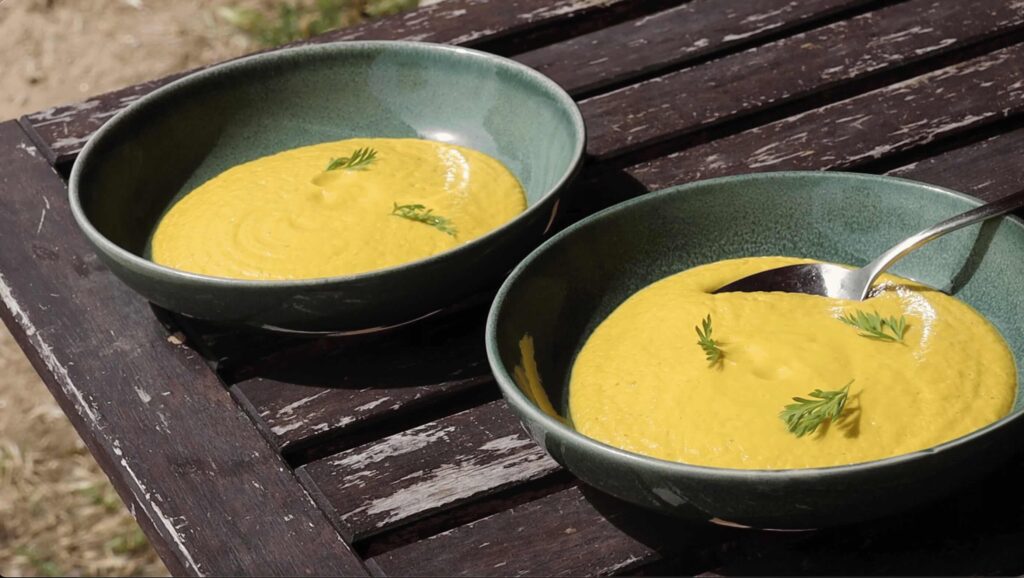
Carrot, Orange & Thyme Soup Recipe
A comforting, silky smooth soup that brings together the natural sweetness of carrots, the brightness of orange zest, and the earthy aroma of thyme
At The Farming Chefs, we love recipes that celebrate seasonal vegetables and allow their natural flavors to shine. This soup is easy to prepare, freezes beautifully, and can be made with ingredients commonly found in the garden.

Serves:
4 people
Time to Prepare:
10 min

Time to cook or cure:
35 min
Skill
Soup making
Serves:
4 people
Time to Prepare:
20 min
Time to cook or cure:
35 min
Skills:
Soup making

Ingredients & Tools
Ingredients
For the Soup
- 1 kg (2.2 lb) carrots, peeled and chopped
- 1 large onion, sliced into half moons
- 3 garlic cloves, roughly chopped
- 2 tbsp extra virgin olive oil
- 4 cm (1½ inches) orange zest, peeled without the bitter white pith
- 1½ tsp sea salt
- 1 tsp dried thyme or 4 tsp fresh thyme leaves
- Water, enough to just cover the carrots (approximately 1–1.2 litres / 4–5 cups)
Optional Garnishes
- Fresh thyme leaves
- A swirl of cream or yogurt
- Toasted pumpkin seeds
- Extra virgin olive oil
- Homemade sourdough croutons
Tools
- Large soup pot or Dutch oven
- Vegetable peeler
- Sharp knife
- Cutting board
- Wooden spoon or spatula
- High-speed blender or immersion blender
- Measuring spoons
The Farming Chefs’ Tips
Roast the Carrots for Even More Flavor
For a deeper, sweeter soup, roast the carrots first.
Toss the carrots with olive oil and roast at 200°C (400°F) for 30–35 minutes before adding them to the soup.
The caramelization adds incredible complexity.
Make Your Own Stock
Homemade chicken stock transforms this soup from good to exceptional.
Whenever we roast chickens on the farm, the bones become stock. The resulting broth adds richness and depth that store-bought alternatives simply cannot match.
Don’t Skip the Orange Zest
Many carrot soup recipes rely on orange juice.
We prefer zest because it contributes intense citrus aroma without excessive sweetness or acidity.
Directions
Simply follow these steps in order to make carrot, orange and thyme soup
Step 1: Prepare the Vegetables
Peel the carrots and cut them into evenly sized chunks. Slice the onion into half moons and roughly chop the garlic cloves.
Step 2: Build the Flavor Base
Heat the olive oil in a large soup pot over medium heat.
Add the onions and sauté for 5–7 minutes until softened and translucent. Stir in the garlic and cook for another minute.
Step 3: Add the Main Ingredients
Add the chopped carrots, orange zest, thyme, and sea salt.
Pour in enough water to just cover the vegetables.
Step 4: Simmer
Bring the soup to a gentle boil.
Reduce the heat and simmer for approximately 25–30 minutes, or until the carrots are completely tender when pierced with a knife.
Step 5: Blend Until Smooth
Remove the pot from the heat.
Blend the soup until silky smooth using a high-speed blender or immersion blender.
If the soup is too thick, add a little extra hot water until you reach your desired consistency.
Step 6: Taste and Adjust
Taste the soup and adjust the seasoning if necessary.
Serve hot with your favorite garnish.
Storage
Refrigerator
Store in an airtight container for up to 4 days.
Freezer
Freeze for up to 3 months. Defrost overnight in the refrigerator and gently reheat on the stovetop.
Frequently asked questions
Can I make this soup ahead of time?
Absolutely, and in many ways, this soup is even better the next day.
As the soup rests in the refrigerator, the sweetness of the carrots, the herbal notes of the thyme, and the brightness of the orange zest have time to meld together into a more balanced flavor. Professional chefs often make soups a day in advance for this very reason.
If you’re preparing for a dinner party, retreat, or family gathering, you can make the soup up to two days ahead. Store it in an airtight container in the refrigerator and gently reheat it over low heat before serving.
If the soup has thickened overnight, simply add a splash of stock or water while reheating until it reaches your desired consistency.
Can I use vegetable stock instead of chicken stock?
Yes, you certainly can.
Chicken stock adds richness, body, and a savory depth that complements the sweetness of the carrots beautifully. However, a good homemade vegetable stock can also produce excellent results.
If you’re using vegetable stock, we recommend making your own from vegetable trimmings whenever possible. Onion skins, carrot peels, celery tops, leek greens, and herb stems can all contribute wonderful flavor.
Avoid overly salty commercial stocks, as they can overpower the delicate balance between the carrots, orange, and thyme.
The choice ultimately depends on the style of soup you’re looking for. Chicken stock creates a more luxurious and rounded soup, while vegetable stock allows the carrot flavor to take center stage.
Why does my carrot soup taste bland?
This is one of the most common problems when making carrot soup.
Many people assume that carrots naturally create a flavorful soup on their own, but there are several factors that contribute to a rich and satisfying result.
First, the quality of the carrots matters enormously. Freshly harvested carrots contain more natural sugars and aromatic compounds than older storage carrots.
Second, don’t rush the onions. Slowly cooking onions in butter creates a sweet and flavorful foundation that supports the entire soup.
Third, seasoning is essential. Carrots can absorb a surprising amount of salt, and under-seasoning is often the reason a soup tastes flat.
Finally, acidity can make a huge difference. The orange zest in this recipe helps brighten the flavors, but a tiny squeeze of fresh orange juice or even a few drops of lemon juice can often transform a soup that feels dull into one that tastes vibrant and balanced.
Can I freeze carrot soup?
Yes, this soup freezes exceptionally well.
Allow the soup to cool completely before transferring it into freezer-safe containers. Leave a little room at the top of each container because liquids expand as they freeze.
The soup can be frozen for up to three months without any significant loss of quality.
When you’re ready to enjoy it, thaw it overnight in the refrigerator and reheat gently on the stovetop.
If the soup has separated slightly during freezing—which can happen with cream-based soups—simply whisk it well while reheating. It will usually return to its original smooth texture.
For the best results, you can also freeze the soup before adding the cream and stir the cream in when reheating.
What are the best carrots to use for soup?
The best soup starts with the best carrots.
Young carrots harvested during cooler weather are often sweeter because they convert starches into sugars as a natural protection against cold temperatures.
Freshly dug carrots from the garden tend to have a sweeter and more vibrant flavor than store-bought carrots that have spent weeks in storage.
Imperator, Nantes, and Chantenay varieties all work wonderfully for soup.
Don’t worry if your carrots are oddly shaped or not beautiful enough for market sales. Soup is one of the best ways to use carrots that may not look perfect but still taste fantastic.
In fact, on our farm, many of the vegetables that don’t make it into our weekly vegetable boxes become soups, stocks, preserves, and sauces.
Can I roast the carrots before making the soup?
Absolutely, and we highly recommend trying it.
Roasting carrots concentrates their natural sugars and creates caramelized flavors that add tremendous depth to the finished soup.
To roast them, toss the carrots with olive oil and roast at 200°C (400°F) for approximately 30–35 minutes until lightly browned around the edges.
Once roasted, add them to the soup and proceed with the recipe as normal.
The result is a richer, more complex soup with subtle notes of caramel and roasted sweetness.
This is often our preferred method when making carrot soup during the cooler months.
Why use orange zest instead of orange juice?
Orange zest contains highly aromatic oils that provide an intense citrus fragrance without adding too much sweetness or acidity.
Orange juice, on the other hand, can sometimes make a soup taste overly sweet or slightly sharp.
By using the zest, you get all of the bright citrus character while allowing the natural flavor of the carrots to remain the star of the dish.
If you’d like a stronger orange flavor, you can add a tablespoon or two of freshly squeezed orange juice at the very end of cooking, but we recommend starting with the zest alone.
What can I serve with carrot orange thyme soup?
This soup is wonderfully versatile and pairs beautifully with a wide variety of dishes.
For a simple lunch, serve it with thick slices of sourdough bread and good butter.
For a more substantial meal, pair it with:
- Roast chicken
- A mature cheddar or goat cheese tart
- Grilled cheese sandwiches
- Homemade focaccia
- A fresh garden salad
- Savory scones
If you’re serving guests, a garnish of crème fraîche, toasted pumpkin seeds, and fresh thyme makes the soup feel elegant enough for a dinner party while remaining rustic and approachable.
How can I make this soup extra creamy?
The secret is blending.
The longer and more thoroughly you blend the soup, the creamier it becomes. Carrots naturally contain enough starch and fiber to create a silky texture without needing large amounts of dairy.
Professional kitchens often blend soups for several minutes before passing them through a fine sieve to achieve an ultra-smooth consistency.
You can also add a small amount of potato while cooking. The potato breaks down during blending and creates an exceptionally creamy texture without changing the flavor significantly.
Is carrot soup actually healthy?
Carrot soup can be an incredibly nourishing meal.
Carrots are naturally rich in beta-carotene, which the body converts into vitamin A. They also contain fiber, antioxidants, and a range of beneficial plant compounds.
When combined with homemade stock, herbs, onions, and quality fats like butter and cream, this soup becomes both satisfying and nutrient-dense.
At The Farming Chefs, we believe that real food starts with quality ingredients. Freshly harvested vegetables, homemade stock, and traditional cooking methods often produce meals that are both deeply nourishing and exceptionally delicious.
Rather than focusing on individual nutrients, we prefer to think about the quality of the ingredients and the care that goes into preparing them. This soup is a perfect example of how simple ingredients can come together to create something wholesome, comforting, and full of flavor.
Fermented Vegetables

Recipe Categories